01
Device damage
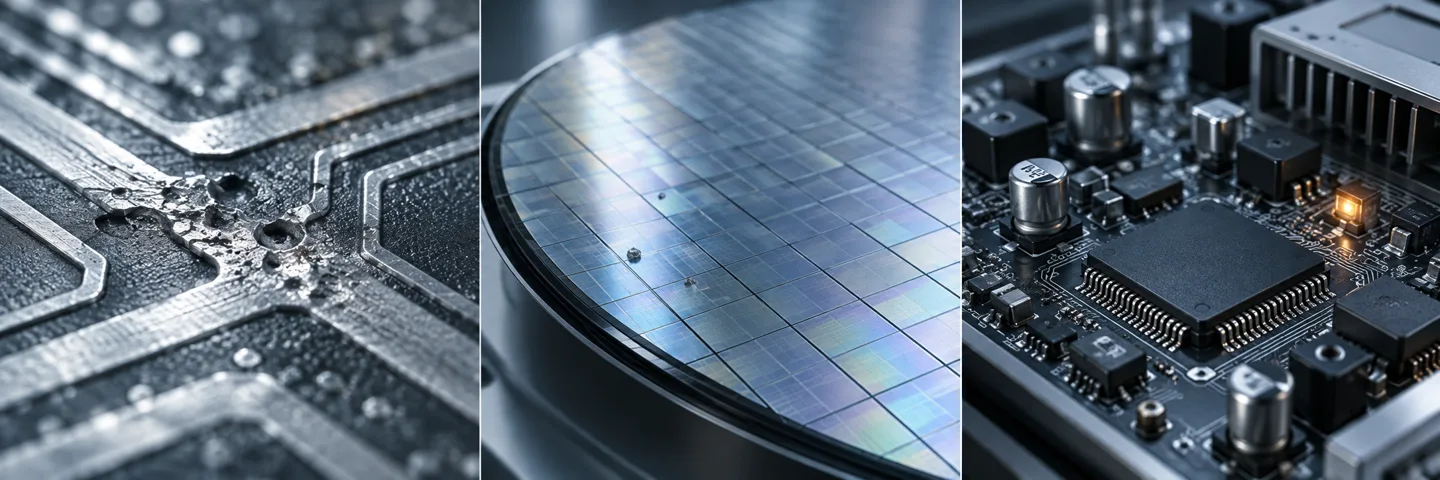
Discharge can damage oxides or junctions and lead to functional failure.
NOVA / WHY ELECTROSTATICS
A discharge can damage devices. Accumulated charge can attract contamination. NOVA is developing technology to record electric-field changes in industrial environments.
Discharge can damage oxides or junctions and lead to functional failure.
Charged surfaces can attract particles, contributing to wafer defects and yield loss.
Discharge can disrupt electronic operation, making conditions and event history important.
AI-generated concepts · Not failure-analysis or customer photographs.
Static electricity is an imbalance of charge and can arise from contact and separation. ESD is a rapid transfer of charge. A field reading alone does not establish a discharge event or the cause of a defect.
Technical reference: EOS/ESD Association · Fundamentals, Part 1 ↗
OUR PRODUCT / EOS
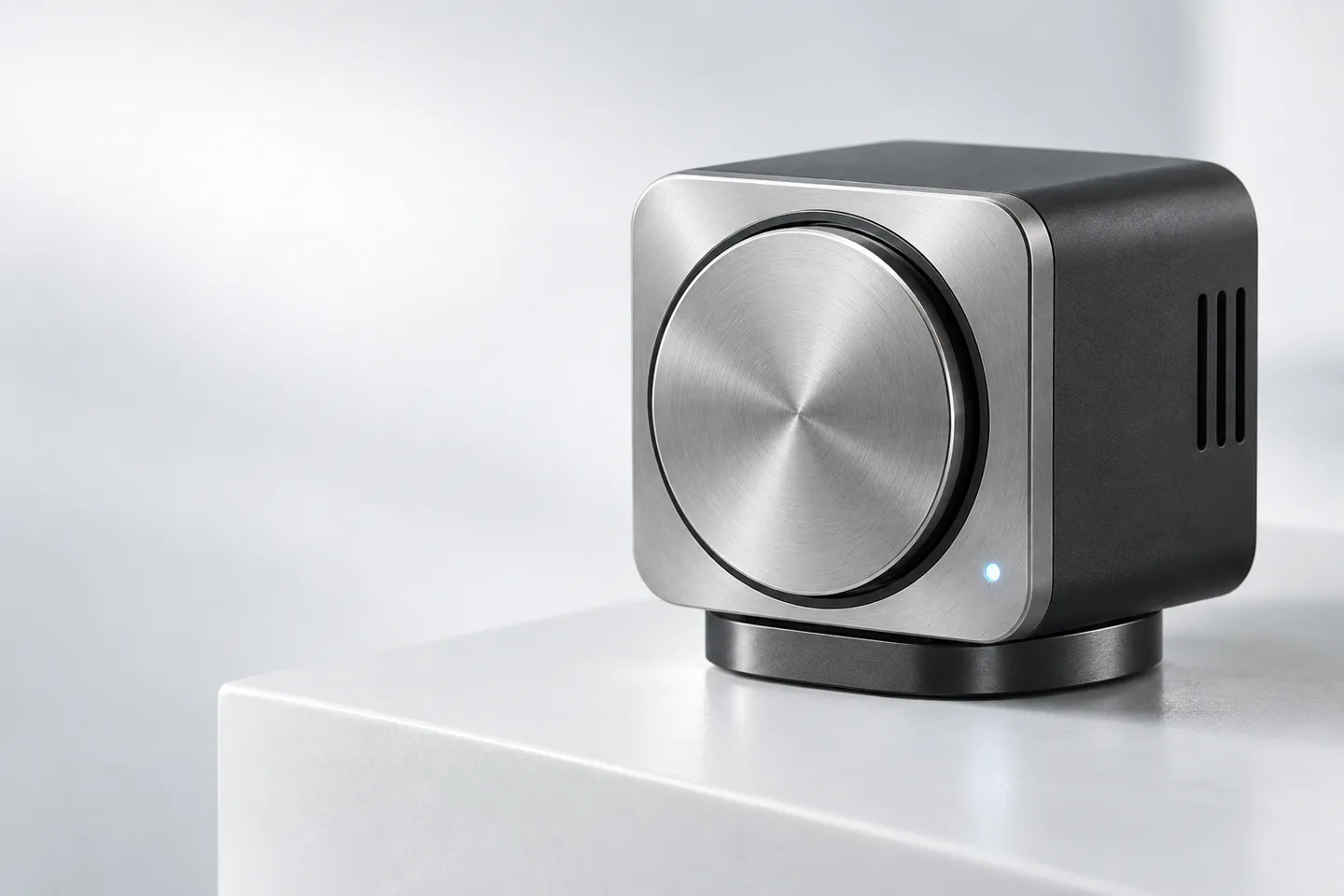
EOS is an electrostatic monitoring system in development, combining a module for mobile equipment with data software.
In development · Integration, calibration and field validation ahead
Discover the productEOS / RECORDS THAT MATTER
Review measurement history by time and device ID.
Designed to review device health and missing intervals together.
The goal is to compare recurring changes after validating location and zone integration.
These are intended record-review capabilities. Device integration and field suitability remain to be validated.
APPLICATIONS
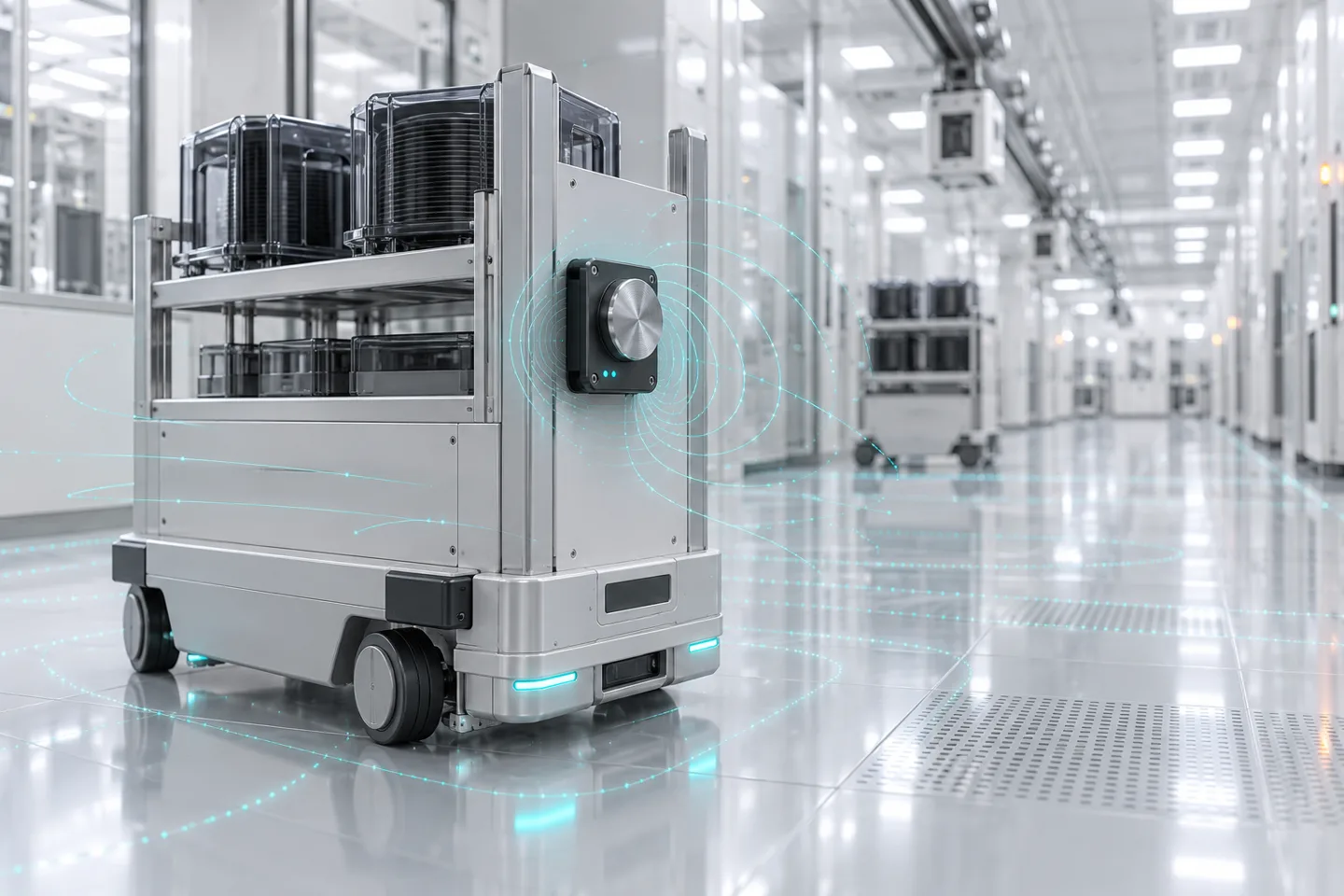
Our initial focus is material carts and transfer routes in semiconductor fabs. Scope depends on installation, grounding and communication conditions.Pilot collaboration
EVIDENCE / DEVELOPMENT
Transient, frequency-response and noise analyses are available, separately identified from physical sensor performance.
Physical sensor integration, reference comparisons and repeatability testing remain. No field defect-reduction results are available yet.
ABOUT NOVA
NOVA develops measurement hardware and data software together. We start with a clear question from the workplace and build evidence step by step.
About NOVA